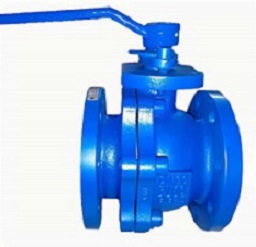
A robust, cost-effective on/off valve designed to meet the strict dimensional and performance requirements of German Industrial Standards (DIN). Engineered with a cast iron body and a resilient seated ball, it offers reliable bubble-tight shutoff for general industrial applications involving water, oil, gas, and neutral process fluids.
View Technical Specs
The DIN Cast Iron Ball Valve is a staple in many industrial fluid handling systems, particularly in Europe and regions adhering to DIN standards. Its design centers around a hollow or solid ball with a hole bored through its center. When the valve is open, the hole aligns with the pipeline, allowing unrestricted flow. When closed, the ball rotates 90 degrees, blocking the flow path entirely.
Constructed from durable cast iron (typically GGG40/50 ductile iron or GG25 gray iron), the valve body provides excellent mechanical strength and resistance to mechanical shock, making it suitable for demanding environments. The ball is usually made of stainless steel (SS304/316) for corrosion resistance, while the seat is crafted from a resilient polymer like PTFE or NBR, ensuring a tight seal even at low pressures.
Available in a full bore (FB) design for minimal pressure drop and pigging capability, or a reduced bore (RB) design for cost savings on larger sizes, the DIN Cast Iron Ball Valve is a versatile solution for applications requiring reliable on/off control in water treatment, HVAC, fire protection, and general industrial processing.
Manufactured to meet the precise dimensional and technical requirements of DIN standards (e.g., DIN 3202, DIN EN 1074), ensuring perfect interchangeability with existing DIN piping systems.
Features a resilient (soft) seat that conforms to the ball's surface, achieving reliable bubble-tight shutoff (typically to ISO 5208 Class IV/V) for isolation applications.
The cast iron body offers an excellent balance between mechanical strength and cost, making it an economical choice for general-purpose industrial applications where high alloy materials are not required.
When fully open, the ball's bore aligns with the pipe ID, providing minimal flow resistance, low pressure drop, and high flow capacity, ideal for pump discharge lines.
Requires only a 90-degree turn to open or close, making manual operation quick and simple. Can also be easily automated with electric or pneumatic actuators for remote control.
The simple, quarter-turn design with few moving parts minimizes wear and tear, resulting in low maintenance requirements and a long service life.
| Parameter | Specification Range |
|---|---|
| Nominal Diameter (DN) | DN15 ~ DN300 (1/2" ~ 12") |
| Nominal Pressure (PN) | PN10, PN16, PN25 |
| Operating Temperature | -20°C ~ 150°C (-4°F ~ 302°F) (Depending on seat material) |
| Applicable Media | Water, Oil, Gas, Air, Neutral Process Fluids |
| Sealing Class | ISO 5208 Class IV, V (Bubble-Tight) |
| Component | Material Options | Standards/Features |
|---|---|---|
| Valve Body | Ductile Iron, Gray Iron | GGG40, GGG50, GG25 (DIN EN 1563, EN 1561) |
| Ball | Stainless Steel | AISI 304 (1.4301), AISI 316 (1.4401) |
| Seat | Resilient Polymers | PTFE (Teflon), NBR (Nitrile), EPDM, FKM (Viton) |
| Stem | Stainless Steel | AISI 420, 17-4 PH (1.4542) |
| End Connection | Flanged, Screwed (NPT/BSP), Wafer | DIN EN 1092-1 (PN10/16/25), ISO 7005-1, BSP/NPT Threaded |
The DIN Cast Iron Ball Valve operates on a simple quarter-turn mechanism to control the flow of fluid:
Used extensively in water treatment plants, distribution networks, and sewage systems for isolation and control of potable water, raw water, and wastewater.
Ideal for heating, ventilation, and air conditioning systems, controlling the flow of chilled water, hot water, and condenser water in commercial and industrial buildings.
Serves as isolation valves in fire sprinkler systems and fire main lines, ensuring reliable operation when needed for life safety.
Utilized in downstream and distribution networks for LPG, natural gas, and fuel oil handling, providing a cost-effective isolation solution.
Found in various manufacturing plants for controlling the flow of cooling water, lubrication oil, compressed air, and other neutral process fluids.
Used in large-scale irrigation systems to control the flow of water to different zones, offering durability and reliable operation in outdoor environments.
A: "DIN" stands for Deutsches Institut für Normung, which is the German Institute for Standardization. DIN standards define technical specifications for a wide range of products, including valves, ensuring uniformity and interchangeability across manufacturers.
A: A full bore valve has a ball with a bore diameter equal to the pipe's internal diameter, providing minimal pressure drop and allowing pipeline pigs to pass through. A reduced bore valve has a smaller bore, which reduces the flow capacity but offers a more compact and cost-effective design, often used for on/off isolation where flow rate is not critical.
A: While it can be used for basic throttling, ball valves are primarily designed for on/off service. Their flow characteristic is not linear, and using them for continuous throttling can cause premature wear on the seat and ball due to high-velocity fluid flow across the partially open orifice.
A: The maximum temperature is primarily limited by the seat material. For example, a PTFE seat typically limits the valve to around 150°C (302°F), while a metal seat (if available) can handle higher temperatures. Always consult the manufacturer's specifications for the exact temperature rating based on the seat material chosen.
A: Yes, provided it is manufactured with materials approved for potable water use (e.g., NSF/ANSI 61 certified materials for the seat and internal components). Always specify "potable water service" when ordering to ensure compliance with relevant health and safety standards.
Our engineering team can customize DIN Cast Iron Ball Valves to meet your specific pressure, temperature, and media requirements. Contact us today for a personalized quote.
Contact Our Technical Team